The Japanese art of Ikebana, or Kadou, has been celebrated for hundreds of years. Ikebana is the word most Westerners know, and it means ‘flower arranging’ or ‘living flowers.’ Kadou means ‘the way of flowers’ and is another tradition along the lines of Shodou (calligraphy) or Karatedou (Karate). Dou means, The Way.
Ikebana focuses on space and emptiness, line and form and the natural character of the plant. It deliberates on the relationship between heaven, earth, and humanity.
What I found intriguing in Ikebana is the use of athroisis. Flowers are arranged in loose groupings in various locations. Each grouping, often with flowers but also with stems and leaves, maintains a balance with the whole.
The borders of each object in the arrangement: petals, leaves and stems are all fractal. This blurs the boundaries. It is possible to imagine that while the fractal borders end at a certain point, in our minds they may extend further, as we intuitively understand the infinite regression of fractals.
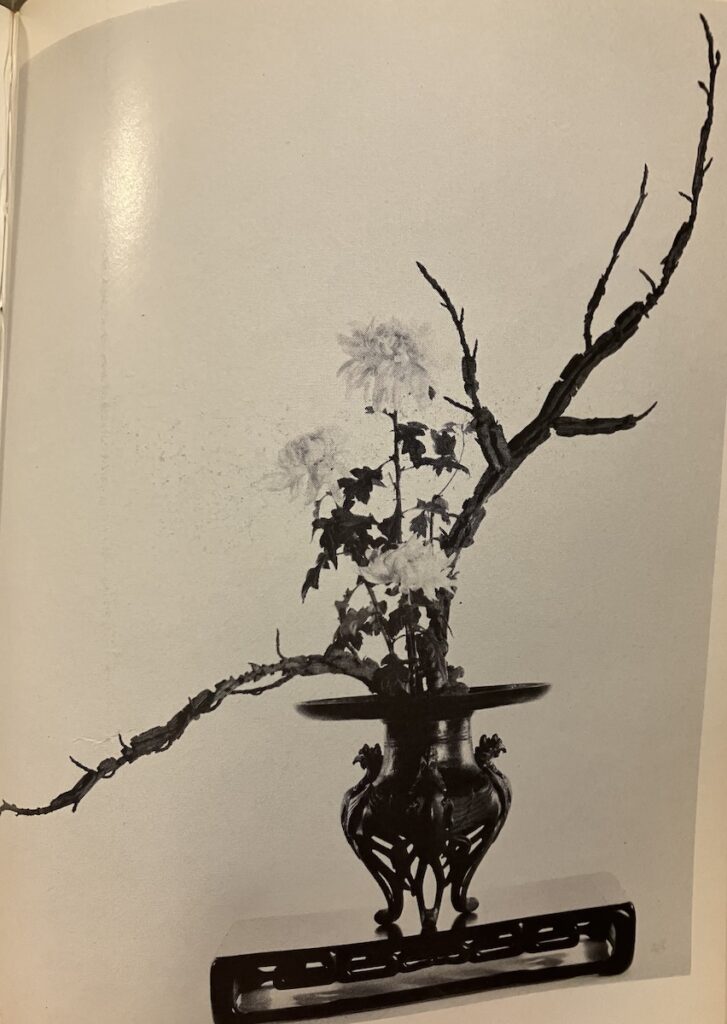
The following pictures were taken from the 1963 book, “Japanese Flower Arrangement Styles” by Lida Webb. The black and white photos add a distinctive clarity to the arrangement of the the flowers.
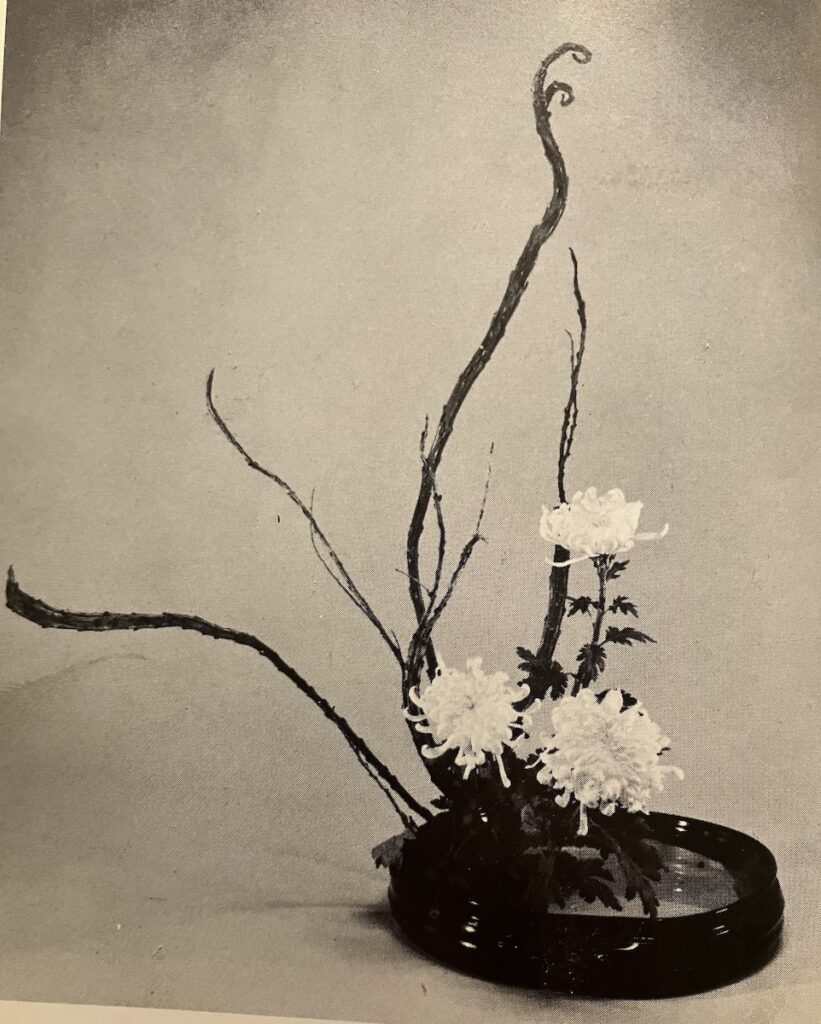
In the photo below, note the white flowers create a harmony on their own, as one pushes away from the other two, its stem and leaves making it separate, yet within the group of the flowers. Meanwhile, the branches create their own group.
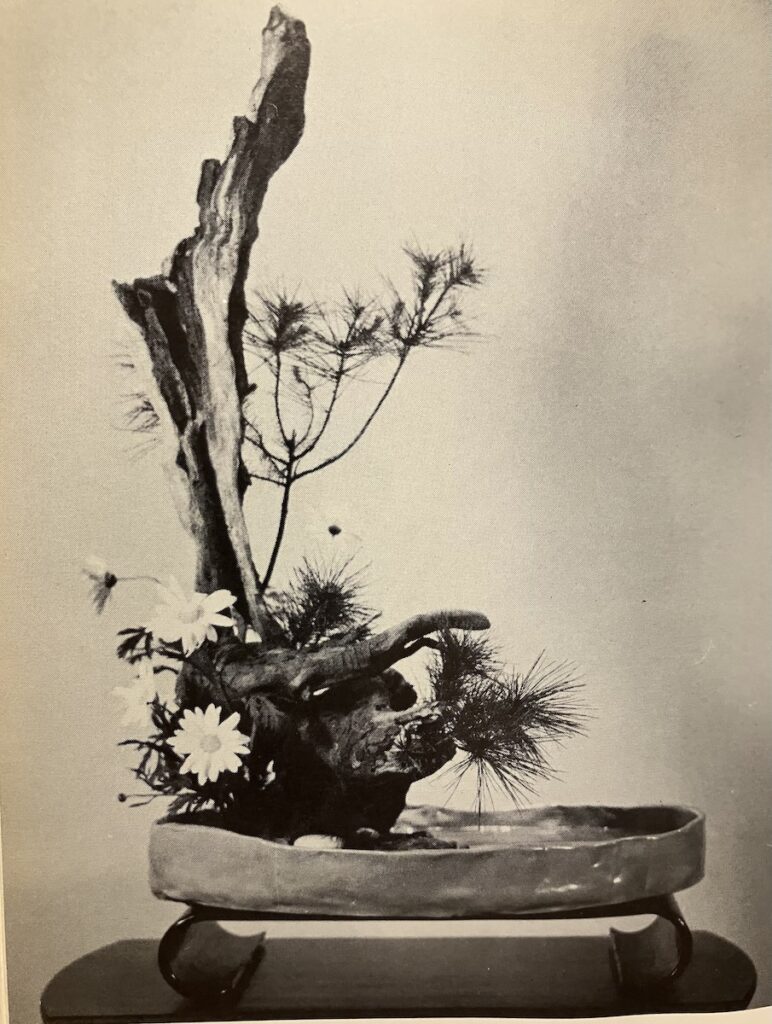
In the next photo, the entire arrangement is offset to the left of the vase, but enough extends into the empty portion of the vase to give it balance. It is not symmetrical, but instead it gives us a dynamic equilibrium. This asymmetry replicates into the arrangement itself, a self-similarity of scale, where the white flowers are offset on the left of the arrangement. The needles, three separate groupings, balance the flowers by pushing rightwards and upwards.
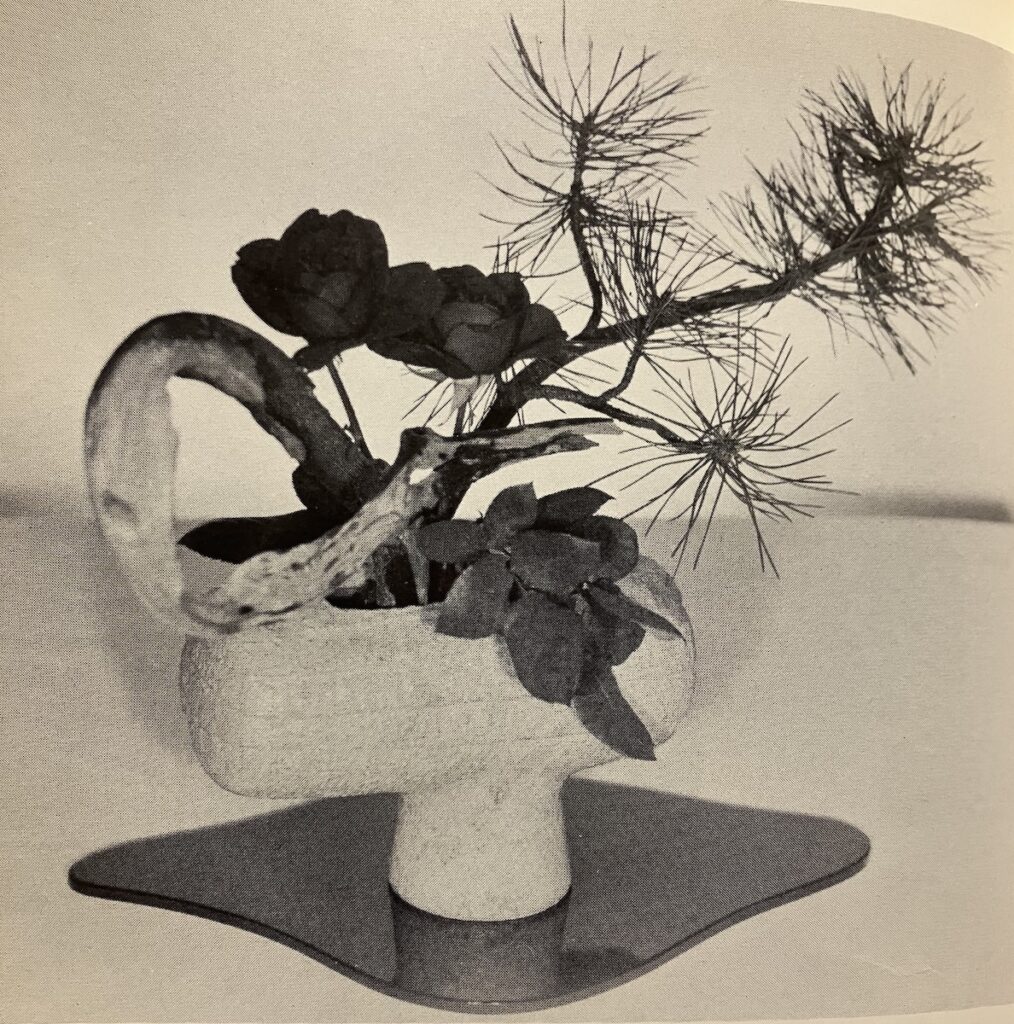
The next arrangement I would argue, has three separate groupings: flowers, leaves and needles. The loose clustering of these three adds to the dynamic balance.
The following image, the branches have flowers. This increases the density of the stems while also grouping the stems closer together, into an almost complete whole. With the heaviness of the flowers, the branches are extended further to the left to provide balance.
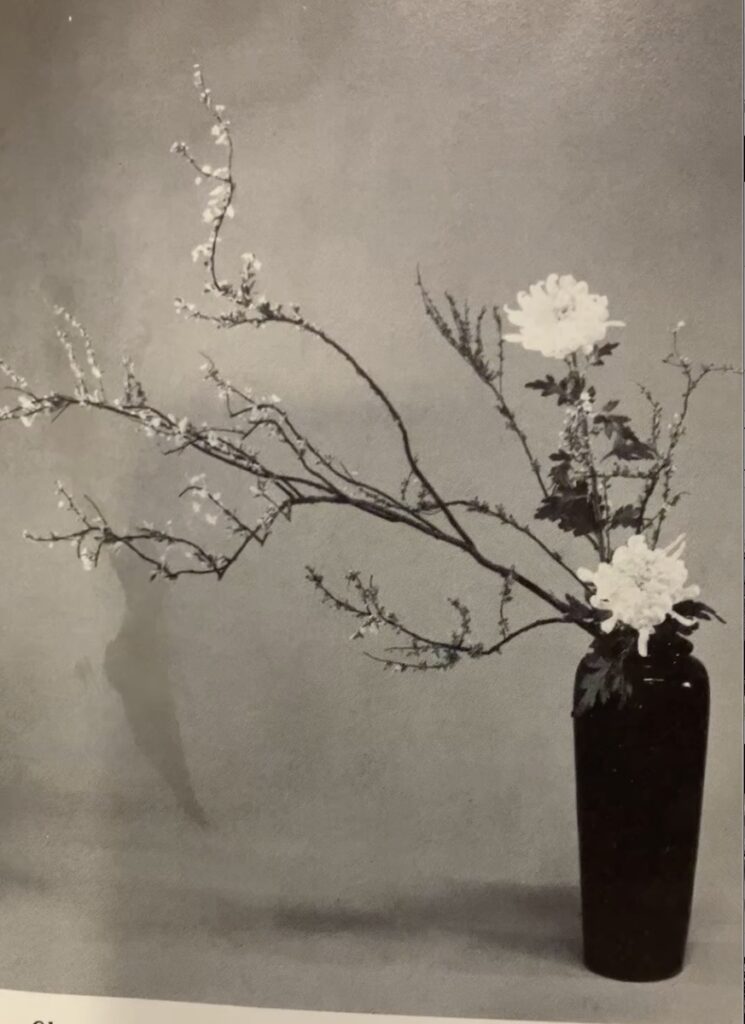
The next photo is similar, except the branches now have leaves. With the flowers in the bottom center, there is more symmetry with this pattern.
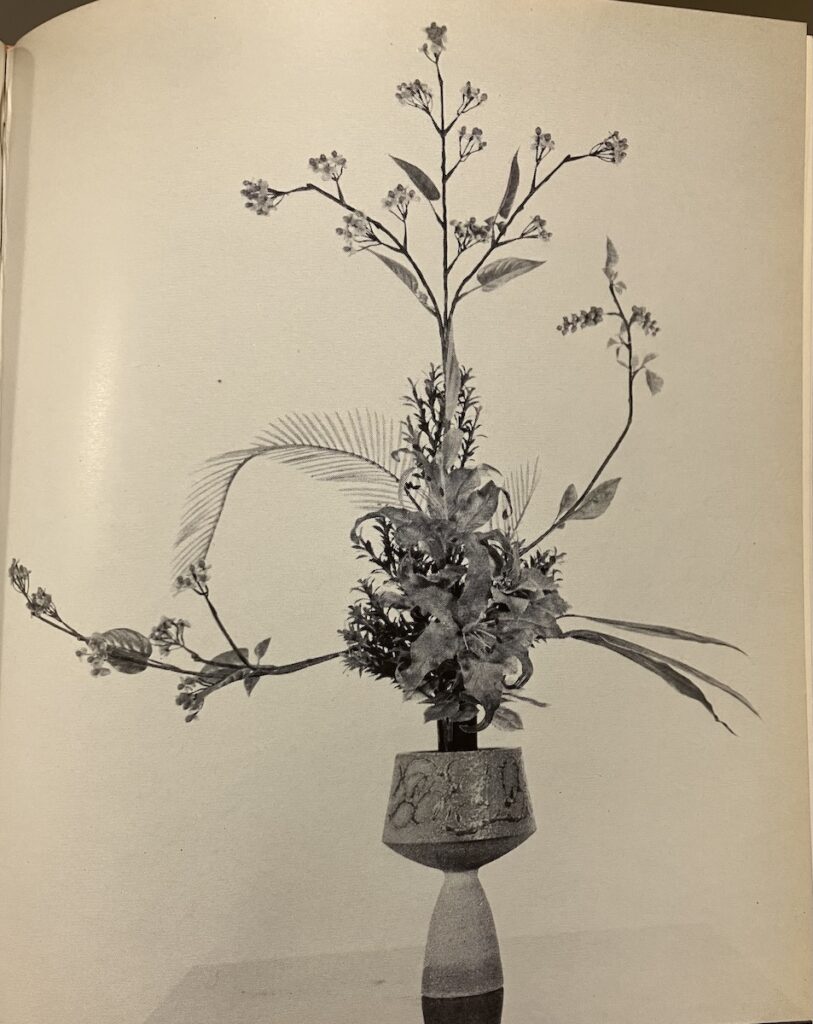
The last photo groups the flowers while a second grouping of leaves fills the empty space left by the flowers. The stark branches pull in opposite directions, focusing on the athroisis pattern of the flowers.
Ikebana is a microcosm of Nature displaying her love for athroisis and self-similarity. By examining the patterns from the various schools, one can glean patterns for designers. There is still symmetry, but it is not precise.